
Flat roofs are efficient, modern, and space-saving — but when they leak, tracking down the source can feel like solving a mystery, since water often travels far from where it actually enters. This guide walks through how to find a flat roof leak, fix it correctly, and keep it from coming back.
Why Flat Roofs Leak Differently Than Sloped Roofs
A sloped, shingled roof relies on gravity to shed water quickly. A flat roof — which usually has a slight pitch, not a truly level surface — relies on membrane integrity, sealed seams, and proper drainage to keep water out, since standing water gets far more time to find a weak spot before it drains away.
That difference is exactly why flat roof leak repair is its own specialty. Water doesn’t just fall off a flat roof; it pools, migrates along the membrane, and can travel several feet horizontally before finding a gap, a seam, or a fastener to slip through. That’s also why the wet spot on your ceiling is so rarely located directly under the actual leak, which makes DIY troubleshooting frustrating for homeowners who assume the two points line up.
Most flat roofs are built from one of a few materials — EPDM rubber, TPO, modified bitumen, or a built-up roof (BUR) system — and each has its own failure points. EPDM tends to develop seam failures and punctures. TPO can suffer from seam separation and UV-related shrinkage over time. Modified bitumen and BUR systems are more prone to blistering, cracking, and issues around flashing details. Knowing which material you have is the first step toward an accurate diagnosis, since the fix for one won’t necessarily work on another.
Regardless of material, the underlying causes of most flat roof leaks tend to repeat themselves: poor drainage, deteriorated flashing, membrane punctures, and aging seams. Understanding those patterns makes it much easier to find the actual source instead of guessing.
How to Find the Source of a Flat Roof Leak
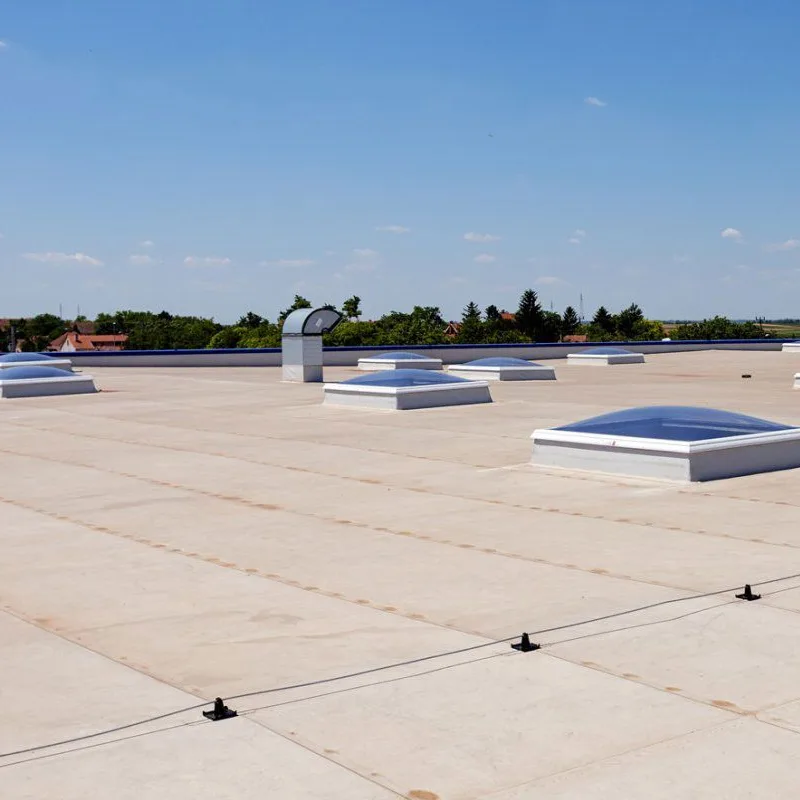
Tracking down a leak on a flat roof takes patience and a methodical approach, since the entry point is rarely where the damage shows up inside.
Start Inside, Then Move Outside
Begin by examining the ceiling stain or damp spot and measuring its distance from two fixed points, like exterior walls. That measurement translates to the roof above, giving you a rough starting zone to inspect — remembering that water often travels along roof decking or insulation before dripping down, so the true entry point is usually upslope from where the stain appears.
Inspect the Usual Trouble Spots First
Certain areas fail more often than open membrane fields, so it makes sense to check these first:
- Roof drains and scuppers.
Clogged or poorly sealed drains are one of the most common sources of standing water and leaks. - Flashing around penetrations.
HVAC units, vent pipes, skylights, and chimneys all interrupt the membrane, and the seals around them degrade faster than the field membrane itself. - Seams and laps.
Where two pieces of membrane meet is inherently a weaker point, especially as adhesives and seam tape age. - Parapet walls and edges.
Roof edges take constant wind stress and are common sites for membrane pull-back or cracked coping. - Low spots and ponding areas.
Water that doesn’t drain within 48 hours after rain is a sign of a drainage problem that will eventually cause a leak if it hasn’t already.
Use a Water Test if the Source Isn’t Obvious
When a visual inspection doesn’t turn up an answer, a controlled water test can help. This involves running water over small, specific sections of the roof one at a time while someone watches for the leak to appear inside, isolating the problem area without soaking the entire roof at once. This is best done by a professional, since it requires careful documentation and roof access safety precautions.
Consider an Infrared or Moisture Scan
For leaks that are especially stubborn or roofs with multiple suspect areas, infrared thermography or a moisture meter scan can reveal trapped water within the roofing assembly that isn’t visible from the surface. This is often the fastest way to pinpoint saturated insulation before it leads to a full section of roof needing replacement.
Fixing a Flat Roof: Repair Methods by Damage Type
Once the source is identified, the right way to fix a flat roof depends on both the membrane material and the type of damage found.
Patching Punctures and Small Tears
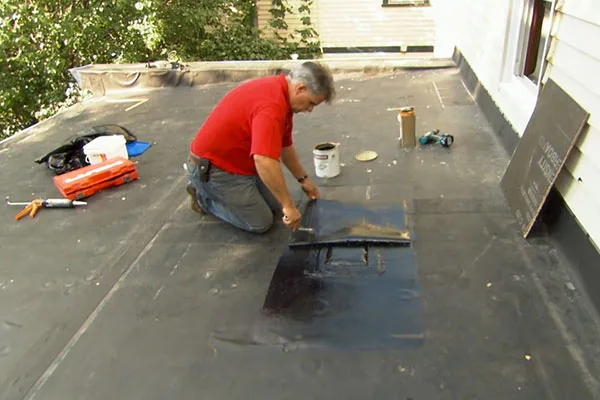
For EPDM rubber roofing, a proper patch involves cleaning the area with a seam cleaner, applying rubber-based primer, and adhering a patch of matching material with seam adhesive, then rolling it firmly to eliminate air pockets. TPO repairs use a similar approach but require heat-welding the patch for a truly watertight bond, since TPO doesn’t adhere the same way with cold adhesives. Modified bitumen typically calls for a torch-applied or self-adhered patch layered over the damaged section.
Resealing Seams and Laps
Seam failure is one of the most frequent causes of flat roof leaks, and fixing it properly means more than just squeezing caulk into the gap. The old seam needs to be cleaned, any failed adhesive removed, and new seam tape or liquid-applied sealant installed according to the manufacturer’s specifications for that membrane type. A rushed seam repair is one of the most common reasons a “fixed” flat roof starts leaking again within a season.
Repairing Flashing Details
Flashing failures around pipes, HVAC curbs, and roof edges often need more than a bead of sealant. A lasting repair usually involves removing the failed flashing boot or metal, addressing any damage to the substrate underneath, and installing new flashing material properly integrated with the surrounding membrane — not just caulked over the top, which tends to fail again within a year or two.

Addressing Ponding Water
If standing water is the root cause, patching the immediate leak without correcting drainage is only a temporary fix. Solutions range from adding or clearing drains, to installing tapered insulation that redirects water toward existing drains, to more significant regrading of the roof surface for larger ponding areas. This is where a professional evaluation really pays off, since misdiagnosing a drainage issue as a simple leak means the same problem resurfaces after the next heavy rain.
When a Section Needs Full Replacement
If a significant portion of the membrane has failed — widespread blistering, multiple seam failures, or saturated insulation underneath — patch repairs stop making financial sense. Replacing that section of roofing, rather than continuing to chase leaks, is often the more cost-effective long-term solution.
Preventing Future Flat Roof Leaks
Once a leak is fixed, a little regular maintenance goes a long way toward keeping it from coming back.
- Clear drains and scuppers seasonally.
Leaves, debris, and granules from the membrane itself can clog drainage points, especially in the fall. - Walk the roof twice a year.
A spring and fall inspection can catch small issues — a lifting seam, a cracked pitch pocket — before they become active leaks. - Check after major storms.
High wind and heavy rain are when existing weak points usually fail, so a post-storm look is worth the effort. - Keep an eye on ponding water.
If the same spot holds water more than two days after rain, flag it for a professional look rather than waiting for a leak to develop. - Don’t ignore small blisters or bubbles.
These often indicate trapped moisture and tend to grow worse, not better, over time. - Schedule a professional inspection every one to two years.
A trained eye catches wear that’s easy to miss from the ground or a quick walk-through.
Regular attention costs far less than emergency flat roof leak repair after water has already reached the insulation or interior of the building.
Frequently Asked Questions
- Why is it so hard to find where my flat roof is leaking?
Water on a flat roof can travel along the membrane, seams, or roof decking before it finds a gap to drip through, so the leak’s entry point is often several feet from the stain on your ceiling. That’s why a systematic inspection, rather than a quick glance, is usually needed to fix a leaking flat roof correctly. - Can I fix a flat roof leak myself?
Small punctures on accessible, low-slope roofs can sometimes be patched with the right materials, but flat roof repair often involves working at height on a surface that can be slippery when wet, along with material-specific techniques that are easy to get wrong. A patch that isn’t properly bonded can fail within weeks, so many homeowners find it’s worth having a professional handle it. - How much does flat roof leak repair usually cost?
Costs depend on the extent of the damage, the roofing material, and how easily the leak source can be located. A small, clearly identified puncture repair costs far less than tracking down a hidden leak that requires multiple test areas or a moisture scan. - Is standing water on a flat roof always a problem?
Brief ponding after rain is normal, but water that lingers for more than 48 hours can strain the membrane and increase the risk of leaks over time. If certain areas consistently hold water, it’s worth having the drainage evaluated. - How long do flat roof repairs typically last?
A properly executed repair, done with compatible materials and correct technique, can last for many years. The key factor is whether the repair addresses the actual root cause — a patch alone won’t hold if the underlying issue, like poor drainage, isn’t also corrected. - When is it time to replace a flat roof instead of repairing it?
If leaks keep recurring in different spots, if the membrane is showing widespread wear, or if the roof is past its expected service life, replacement usually becomes more cost-effective than continued patching.
Stop Chasing the Leak — Call in a Flat Roof Specialist
Flat roof leaks rarely fix themselves, and every rainstorm that passes is another chance for a small leak to become a bigger, more expensive problem. If you’re dealing with a mystery leak, ponding water, or a membrane that’s showing its age, the fastest path to a lasting fix is an experienced eye on the actual roof.
Wooster Roofing has the experience to trace flat roof leaks to their true source and repair them correctly the first time — not just patch the symptom. Reach out today for an inspection.
Wooster Roofing Text: (978) 817-7088 Call: 978-851- 7663 Website: wooster-roofing.com
Tags: Fix Flat Roof, Fix Leaking Flat Roof, Fixing Flat Roof, Flat Roof Leak Repair