High winds, hail, and falling branches can turn a healthy roof into an urgent problem in minutes, and how you respond in the first few hours often determines how much damage spreads to the inside of your home.
Why the First Few Hours Matter Most
Storm damage rarely stays contained. A single missing shingle, a cracked vent boot, or a tree limb that’s punched through the decking can let water into your attic within the first heavy rain that follows, and once water reaches insulation, drywall, or framing, the cost of repair climbs fast.
That’s what makes a roof repair emergency different from routine maintenance. It’s not just about fixing the roof – it’s about limiting damage to everything underneath it while a permanent repair gets scheduled. Homeowners who act quickly and methodically in the aftermath of a storm typically end up with smaller repair bills, smoother insurance claims, and far less disruption to daily life than those who wait and hope the damage isn’t as bad as it looks.
This guide walks through exactly what to do, in order, from the moment you notice storm damage to the point a professional crew has the situation under control.

Step 1: Put Safety Before Everything Else
Before thinking about the roof at all, make sure the immediate area is safe.
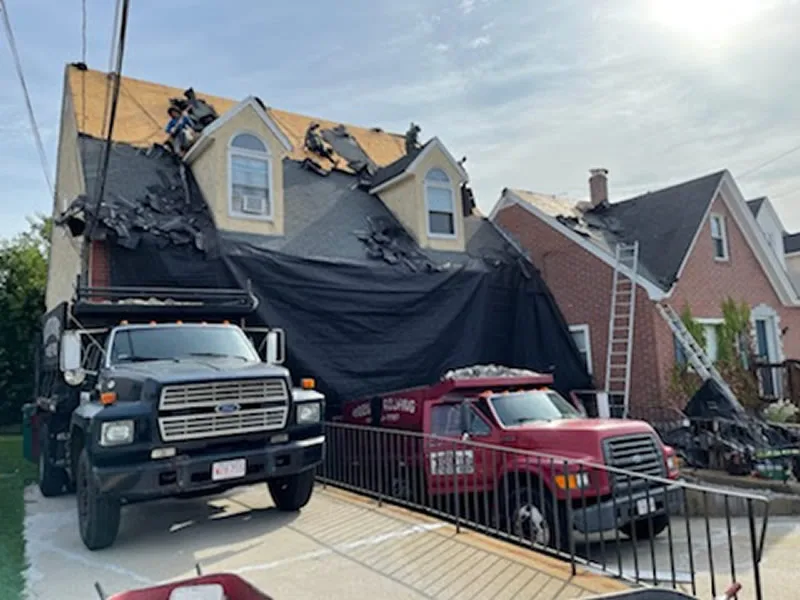
- Stay off the roof. Wet, wind-battered shingles and a roof that may have hidden structural damage are not safe to walk on, even for an experienced homeowner. Leave the climbing to professionals with the right harnesses and experience.
- Watch for downed power lines. If a storm has knocked branches or wires onto the roof or yard, treat all lines as live and stay well clear until the utility company confirms it’s safe.
- Check for structural sagging. A visibly sagging roofline or ceiling, especially with active water coming through, can signal a structural problem. If you see this, evacuate that area of the house and call a professional immediately.
- Move valuables away from active leaks. Inside the home, shift furniture, electronics, and belongings away from any dripping or staining ceiling, and place buckets or tarps to catch water and protect flooring.
- Turn off electricity to affected areas if water is near wiring or fixtures. Water and electrical systems are a dangerous combination, and it’s safer to lose power to a room than risk a shock hazard.
Once people and pets are safe and the immediate hazards are addressed, it’s time to assess and document the damage — without putting anyone on the roof to do it.
Step 2: Document the Damage and Apply Temporary Protection
Documenting for Insurance
Before any tarps go up or repairs begin, take photos and video of the damage from the ground and from inside the home, including ceiling stains, visible shingle or gutter damage, and any debris on the property. This documentation matters for two reasons: it supports your insurance claim, and it gives a roofing contractor a clear picture of the damage before they arrive. Note the date and approximate time of the storm as well, since insurers often ask for this when processing an emergency roof leak repair claim.
Temporary Measures That Actually Help
A few temporary steps can limit damage while you wait for a professional, but they should stay simple and safe:
- Cover active leaks inside the attic
with a bucket, tarp, or plastic sheeting to catch water and protect insulation and framing. - Move belongings
away from the leak path in any affected rooms. - Photograph, but don’t attempt roof-level tarping yourself
unless you have the right safety equipment and experience — a fall from a damaged, wet roof is a far bigger risk than the water damage itself. - Clear gutters and downspouts from the ground
if debris is visibly causing water to back up, using a ladder safely and only if conditions allow.
Calling Your Insurance Company
Most homeowners’ policies cover sudden storm damage, including wind, hail, and fallen debris. Call your insurer as soon as it’s practical to start the claims process, and ask whether they require an adjuster visit before repairs begin or whether emergency mitigation work (like tarping) can proceed first. Many policies specifically cover reasonable emergency measures taken to prevent further damage, so keep receipts for any tarping or temporary repair services.
What Emergency Roof Repair Services Actually Do
When you call for emergency roofing repairs, a professional crew’s first visit typically focuses on stabilization rather than a full fix, since permanent repairs often need materials, dry weather, or insurance approval that can’t happen the same day.
- Rapid Assessment
A roofer will inspect the damage from the roof itself, checking for compromised decking, missing or displaced shingles, damaged flashing, and any structural concerns that affect safety. This assessment tells them exactly what needs immediate attention versus what can wait for a scheduled repair. - Tarping and Board-Up
For active leaks or exposed decking, a heavy-duty tarp is secured over the damaged area to keep water out until permanent repairs can be made. This is a specialized job — a poorly secured tarp can blow off in the next round of wind, doing more harm than good, which is exactly why this step benefits from a trained crew rather than a DIY attempt. - Debris Removal
Fallen branches, displaced shingles, and other storm debris get cleared from the roof and gutters so water can drain properly and so the crew has a clear, safe surface to work on. - Stopping Active Leaks
Where possible, crews will address the specific point of water intrusion directly — resealing a flashing detail, patching a puncture, or securing a lifted shingle — to reduce ongoing damage even before the full repair is scheduled.

Scheduling the Permanent Fix
Once the property is stabilized, the roofer will typically provide a detailed assessment and estimate for the permanent repair or replacement, working with your insurance adjuster’s timeline if a claim is involved. This keeps the process moving without rushing a repair that needs to be done right.

Choosing the Right Emergency Roofer — and Avoiding Storm Chasers
Storms tend to bring out opportunistic contractors who go door to door offering fast, cheap repairs. Knowing what to look for protects both your home and your wallet.
Warning Signs of a Storm-Chasing Contractor
- Unsolicited door-to-door offers immediately after a storm, especially with high-pressure tactics or demands for full payment upfront.
- No local address, permanent business location, or verifiable references in your area.
- Reluctance to provide proof of licensing and insurance when asked directly.
- Offers to “waive your deductible,” which is illegal in many states and often a sign of insurance fraud.
- Vague, unwritten estimates instead of a detailed, itemized quote.
What to Look For Instead
- Established local presence.
A company with a real address and a history in your community is easier to hold accountable and far more likely to stand behind its work. - Proper licensing and insurance.
Ask for proof and verify it if you’re unsure — this protects you from liability if a worker is injured on your property. - Clear, written estimates.
A legitimate emergency roof repair service will explain the scope of work and cost in writing before work begins. - Willingness to work with your insurance company.
Reputable roofers are used to coordinating with adjusters and can help make sure documentation supports your claim. - References and reviews you can actually verify.
A quick search should turn up a real track record, not just a handful of suspiciously recent reviews.
Taking a few extra minutes to vet a contractor, even during an emergency, is one of the best ways to avoid a second headache on top of the storm damage itself.
Frequently Asked Questions
- How quickly should I call for emergency roof repair after a storm?
As soon as it’s safe to assess the situation, ideally within the same day. Active leaks and exposed decking allow damage to spread quickly, and getting a crew out fast — even just for temporary tarping — can prevent a much larger repair bill. - Will my insurance cover emergency roof repairs?
Most homeowners’ policies cover sudden, storm-related damage such as wind, hail, and fallen debris, including reasonable emergency measures taken to prevent further damage. Coverage details vary by policy, so it’s worth confirming specifics with your insurer and keeping all documentation and receipts. - Is it safe to inspect my roof myself after a storm?
It’s safer to inspect from the ground using binoculars rather than climbing onto a wet, potentially damaged roof. Storm-battered roofs can have hidden structural weaknesses that aren’t visible from a quick glance, making a professional inspection the safer choice. - What’s the difference between temporary tarping and a permanent repair?
Tarping is a short-term measure to stop active water intrusion while a full repair or replacement is scheduled. It’s not meant to be a long-term solution, and a permanent fix should still follow as soon as materials, weather, and insurance approval allow. - How do I know if my roof needs a repair or a full replacement after storm damage?
This depends on the extent of the damage — isolated missing shingles or a single damaged area often just need repair, while widespread damage across multiple roof sections, or damage to the structural decking, often points toward replacement. A professional inspection is the most reliable way to know for certain. - What should I have ready when a roofer arrives for an emergency call?
Having your photos and documentation of the damage on hand, along with your insurance information if you’ve already started a claim, helps the crew move quickly and gives them the context they need to prioritize the right repairs.
When the Storm Passes, We’re Ready to Respond
Storm damage doesn’t wait for a convenient time, and neither should your response. Acting quickly, staying safe, and calling a trustworthy local roofer are the three things that matter most in the hours after a storm hits your home.
Wooster Roofing provides emergency roof repair services with the fast response and honest guidance homeowners need when the pressure is on. If your roof took a hit, don’t wait for the next storm to make things worse — call now.
Wooster Roofing Text: (978) 817-7088 Call: 978-851-7663 Website: wooster-roofing.com
Tags: Emergency Roof Leak Repair, Emergency Roof Repair Services, Emergency Roofing Repairs, Roof Repair Emergency