A storm rarely ends when the wind stops. Most homeowners only realize this once the silence returns and they step outside to assess what has changed. A few shingles may be missing, gutters may look slightly shifted, or there may be no obvious damage at all from the ground, yet something still feels uncertain. That uncertainty is often the first signal that the roof has experienced more than what is immediately visible.
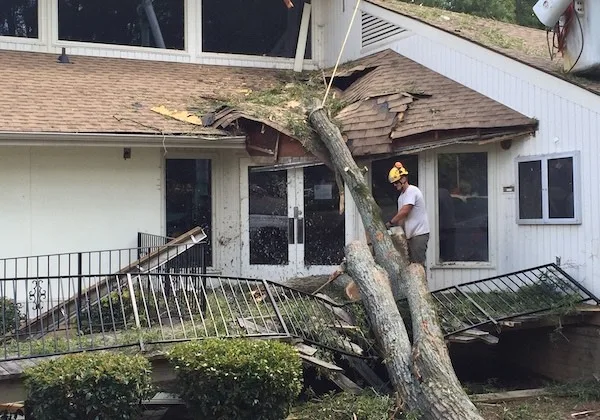
Storm damage is rarely clean or contained. It behaves in layers, where the most important issues often begin beneath what the eye can see. A lifted shingle can expose underlayment, a small opening can allow slow moisture intrusion, and wind impact can weaken sections of the roof that still appear intact. This is why the most important decisions happen not during the storm, but in the hours and days that follow.
At Wooster Roofing, we approach storm recovery with one priority: clarity before damage spreads. If your home has been affected by recent weather, calling (978) 851-7663 or visiting online gives you immediate access to a professional inspection that determines whether your roof requires Emergency Roof Repair, standard Roof Repair, or full Roof Replacement before conditions worsen.
Why Storm Damage Is Almost Never What It Looks Like
From the ground, a roof can appear mostly unchanged after a storm while still being structurally compromised in ways that are not visible without close inspection. Wind pressure does not always remove shingles completely; it often lifts and loosens them just enough to break the seal that protects the layers beneath.
Once that seal is compromised, water does not need a large opening to create damage. It only needs time. Moisture can travel beneath shingles, follow nail paths, and reach roof decking long before any interior sign appears inside the home. By the time a ceiling stain is visible, the actual entry point has often been active for hours or even days.
This is why Wind Damage is one of the most underestimated causes of long-term roofing issues. It does not always create immediate failure, but it quietly creates conditions where failure becomes inevitable if not addressed early.
Understanding this behavior changes the entire decision-making process after a storm. The question is not whether damage is visible, but whether the roof’s protective system has been disrupted.

The First Priority After a Storm: Stabilize Before You Assess
The most important mistake homeowners make after storm exposure is assuming that visible condition reflects actual condition. A roof that looks intact may still be actively allowing moisture intrusion, while a roof that looks heavily affected may still be structurally repairable.
The correct first step is stabilization through professional evaluation rather than assumption. This is where Emergency Roof Repair becomes essential, not because every roof needs immediate reconstruction, but because some roofs require immediate containment to prevent ongoing damage.
If there is active leaking, interior moisture, or visible roof openings, immediate intervention is necessary to prevent escalation. Even in less obvious cases, early inspection ensures that small vulnerabilities do not develop into system-wide failure.
When Storm Damage Can Still Be Repaired
In many cases, storm damage does not require full replacement. A properly executed Roof Repair can restore full performance when the underlying structure remains sound and the damage is localized rather than systemic.
Repair is typically appropriate when shingles have been displaced in limited areas, flashing has been loosened at specific joints, or minor leaks have formed due to isolated points of wind exposure. In these situations, the roofing system is still fundamentally intact, and restoring seal integrity allows it to continue performing as designed.
The key factor is not how the roof looks, but whether damage is contained. If the majority of the system remains stable and the issue can be traced to specific impact zones, repair is often the most efficient and cost-effective solution.
When Storm Damage Signals a Replacement-Level Situation
There is also a point where storm damage reveals deeper aging or widespread vulnerability already present before the storm occurred. In these cases, repair becomes a temporary measure rather than a lasting solution, and a full Roof Replacement becomes the more responsible decision.
This is often the case when shingles are failing across multiple areas, not just impact points, or when leaks appear in different sections of the home over a short period of time. These patterns indicate that the roofing system is no longer functioning as a unified protective layer.
Age plays a significant role as well. When a roof is already near the end of its expected lifespan, storm impact often accelerates existing deterioration rather than causing isolated damage. In these cases, continuing repairs may delay the inevitable without restoring long-term reliability.
A replacement decision is not about severity alone but about system integrity. When the structure can no longer reliably protect the home as a whole, replacement becomes the only stable long-term solution.
The Real Risk Most Homeowners Do Not See Immediately
The costliest part of storm damage is not the initial impact. It is what happens afterward when moisture begins spreading unnoticed beneath roofing layers.
Once water enters the system, it does not remain stationary. It travels along decking, collects in insulation, and gradually weakens structural materials over time. This process is slow enough that homeowners often assume the issue is minor until interior symptoms begin to appear.
By the time visible interior damage occurs, the cost difference between early action and delayed response can become significant. What could have been a controlled repair may evolve into a broader restoration involving insulation, drywall, and structural correction.
This is why timing is not simply a maintenance concern. It is a cost control decision.

Why Professional Inspection Changes Everything
Storm damage cannot be accurately evaluated from appearance alone. Roofing systems contain multiple layers that interact with each other, which means visible damage often represents only part of the actual issue.
A professional inspection evaluates the roof as a system rather than a surface. This includes assessing moisture penetration beneath shingles, checking decking stability, evaluating flashing integrity, and identifying areas where wind uplift may have compromised adhesion without removing materials entirely.
At Wooster Roofing, inspections are designed to remove uncertainty. Homeowners receive a clear explanation of what has been affected, what remains stable, and what level of intervention is required to restore long-term protection.
If you are uncertain about your roof after a storm, calling (978) 851-7663 ensures that the next step is based on verified condition rather than assumption.

Making the Right Decision Without Delay
After storm exposure, the most important factor is not reacting quickly in panic, but acting decisively with accurate information. The right response depends entirely on the actual condition of the roofing system, not the initial appearance from the ground.
If damage is localized and structural integrity remains intact, Roof Repair restores protection efficiently. If the system shows widespread compromise or age-related vulnerability, Roof Replacement becomes the more stable long-term solution. In urgent cases, Emergency Roof Repair prevents immediate escalation while a full assessment is completed.
What matters most is not waiting for visible worsening before taking action, because storm-related roofing issues often progress internally before they appear externally.
Frequently Asked Questions
- What should I do immediately after storm roof damage?
The first step is to ensure safety, avoid climbing onto the roof, and schedule a professional inspection to determine whether hidden damage exists beneath the surface. - How do I know if I need emergency roof repair?
If there are active leaks, visible openings, or water intrusion inside the home, Emergency Roof Repair should be arranged immediately to prevent further structural damage. - Can storm damage be repaired without full replacement?
Yes, if the damage is localized and the roof system is still structurally sound, Roof Repair is often sufficient to restore performance. - What is wind damage in roofing?
Wind Damage refers to lifting, loosening, or tearing of shingles and roofing materials caused by high wind exposure, often creating hidden vulnerabilities. - How quickly should I act after a storm?
Ideally within 24 to 48 hours, since moisture intrusion can begin immediately and spread beneath roofing layers before visible signs appear.
Storm damage does not resolve itself, and what appears minor today can become a significantly larger repair or replacement if left unaddressed. The most effective step is to have your roof evaluated quickly so you understand exactly what condition it is in before further deterioration occurs.
Call (978) 851-7663 or visit online today to schedule an inspection and receive a clear, professional recommendation that protects both your home and your long-term investment.
Tags: Emergency Roof Repair, Roof Repair, Roof Replacement, Wind Damage